Hello everyone!
Thank you, Valerie, Rachel, Mollie, and thank you to all of my colleagues for having me here. It is a real pleasure to be part of this conversation.
I want to speak about UzLAB, an independent literature and art residency I started in Uzbekistan in 2018.
But I want to tell the story a little differently today.
I want to talk not only about what we built, or why it eventually became difficult to sustain, but also about how we actually made it work – how we welcomed artists from very different countries and circumstances when we had very limited resources.
Because, in a way, UzLAB was built not with money, but with relationships.

Where did the idea come from?
The seed of UzLAB was planted much earlier, in 2004, when I was a writer-in-residence in Iowa in the United States.
It was my first experience of an international residency.
I met writers from very different countries. We lived together, talked together, wrote together and learned from one another.
And I realized that a residency was not simply a place where writers came to work.
It was a way of discovering another country through people – and discovering yourself through other cultures.
I came back to Uzbekistan and started asking myself:
Why don’t we have something like this?
At the time, whenever I travelled to international festivals and residencies, I met wonderful writers and artists from different parts of the world. And very often they would ask me:
“Do you have something like this in Uzbekistan?”
“Do you have a writers’ residency?”
“Do you have an international festival?”
And honestly, I was sometimes ashamed to say: “No, we don’t.”
So eventually I thought: perhaps instead of waiting for someone else to create it, I should try to create it myself.
And that is how UzLAB started in 2018.
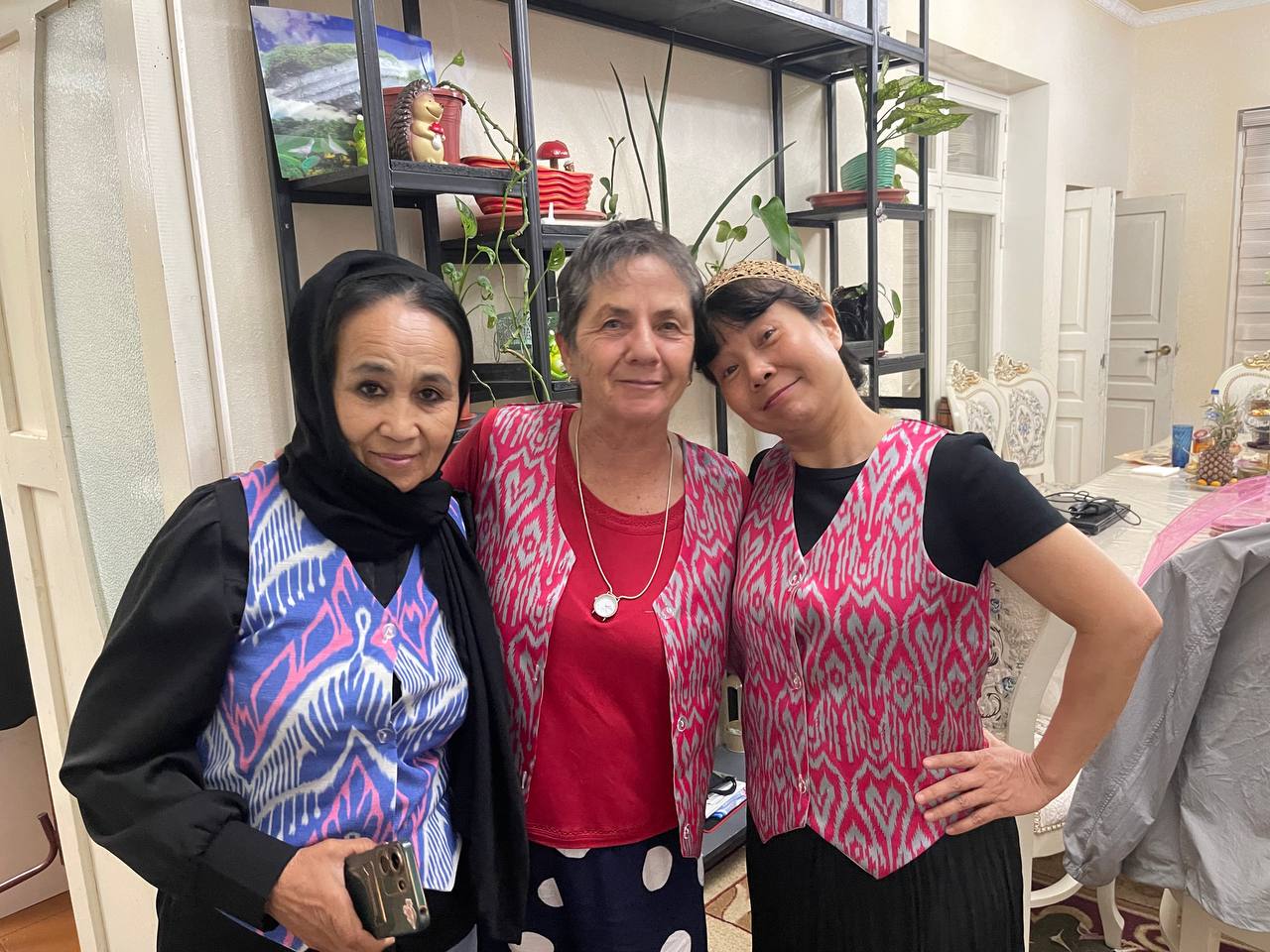
From the beginning, UzLAB was very personal and very informal.
I didn’t have a large institution behind me. I didn’t have a residency building, a permanent staff or a big budget.
I had my family, my friends, some volunteers, and a network of people I had met during many years of travelling and working in literature and culture.
Many of our participants were people I had met personally at festivals, conferences or residencies around the world.
Sometimes they were friends of friends.
And gradually, as people heard about UzLAB, artists whom I had never met also started contacting us and asking if they could participate.
We encouraged people to express their interest, but UzLAB was never really designed as a highly competitive application system.
Our philosophy was quite simple:
Whoever you are – come, come!

If you are a poet, writer, translator, musician or artist, and you want to come to Uzbekistan, meet people, share your work and learn something new, we wanted to find a way to welcome you.
This was particularly important to me because artists come from very different economic circumstances.
Some have institutional support behind them. Some have almost none.
Some can easily pay for international travel. For others, even an international flight can be a major barrier.
So we tried to keep our own requirement as simple as possible:
We asked participants, whenever they could, to cover their international flight.
Once they arrived in Uzbekistan, we tried to take care of the rest.
And when I say “we,” I really mean a very large circle of people.
My family.
My friends.
Local writers and artists.
Volunteers.
Teachers.
University colleagues.
Host families.
People who simply believed that bringing people together was worthwhile.

For a residency of perhaps three to fifteen people, lasting from a week to two weeks – sometimes longer – you can imagine what that means.
And you may also ask:
How could you possibly do this?
The answer is: we were not rich.
But Uzbekistan is a very hospitable country.
And hospitality became part of our residency model.
One of the most important decisions we made was to avoid treating accommodation simply as a hotel problem.
Whenever possible, participants stayed with local writers, poets and artists.
These were often people I knew personally.
I would call them and say:
“We have a poet coming from another country. Could you host them for a few days?”
And very often the answer was simply:
“Of course.”
There was no commercial transaction.
They were happy to welcome a fellow artist from another country into their home.
And this changed everything.
A hotel gives you a room.
A host family gives you a life.
You have breakfast together.
You meet the family.
You talk late into the evening.
You learn what people actually eat.
You hear stories.
You discover how people live.

And suddenly the international artist is no longer simply a visitor staying in Uzbekistan.
They become a guest.
And the host family is no longer simply providing accommodation.
They become part of the residency.
For me, this was one of the most successful elements of UzLAB.
Another principle was that we did not want our participants to see Uzbekistan only through Tashkent or through famous monuments.
So we tried to move around the country.
We went to places such as Samarkand, Bukhara, Khorezm, Rishton and different parts of the Ferghana Valley.
And again, my personal network became extremely important.
I am a graduate of a pedagogical university, so over the years I developed a very large network of teachers and university people.
When I wanted to organize an event in another city, I could call a friend who worked at a university or school and say:
“We have international writers coming. Can we do something together?”
And very often the answer was yes.
Sometimes a university classroom became our venue.
Sometimes a school.
Sometimes a library.
Sometimes an artist’s studio.
Sometimes simply someone’s home.
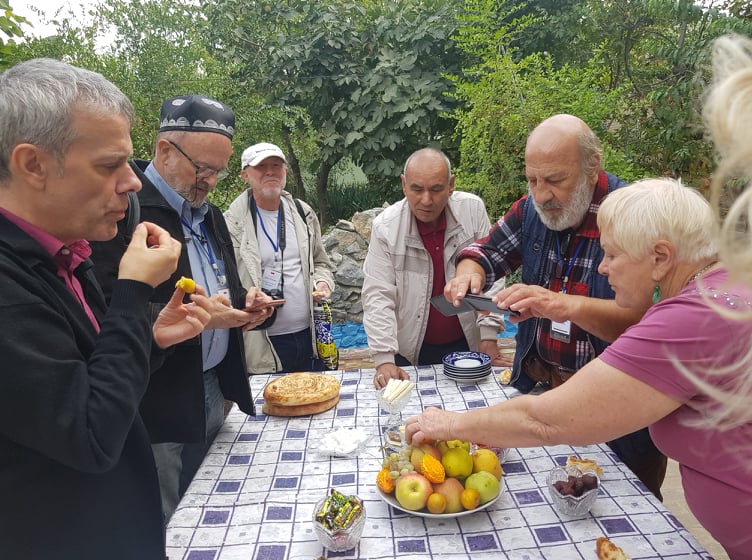
We tried to use non-commercial spaces whenever possible.
And this also created another kind of exchange.
Our international participants met Uzbek writers, teachers and students.
Young people who might never otherwise have had a conversation with a writer from Japan, Australia, the USA, Denmark, India, Cypress, or Bulgaria suddenly had that opportunity.
And our local writers had an opportunity to meet people from the wider literary world.
So the residency was not only bringing foreigners to Uzbekistan.
It was also bringing Uzbekistan into conversation with the world.
Our main working language was English.
Sometimes we used Russian.
Sometimes Uzbek.
And whenever necessary, I interpreted myself.
Why English?
Because Uzbekistan is increasingly investing in English-language education, and English has become an important gateway for young people who want to participate in international academic, cultural and professional life.
So when we brought foreign writers and artists into schools and universities, we often tried to connect them with English-speaking or English-learning communities.
This had a second purpose.
I wanted Uzbek writers and young people to understand that learning a foreign language is not only about passing an exam.
It can give you access to people.
It can give you access to conversations.
It can allow you to present your work to the world.
So language mediation became part of the cultural exchange itself.
And, of course, sometimes language created funny situations.
Sometimes we had to use English, Russian, Uzbek, gestures, Google Translate – and a lot of patience!
But somehow people managed.
Because the most important language of a residency is often curiosity.

This was another lesson for me.
When you invite someone from another country to Uzbekistan, you cannot assume that they will automatically understand the cultural context.
What seems completely normal to us may be unfamiliar to them.
And what seems obvious to them may be completely new to us.
So we tried not to hide these differences.
We tried to create opportunities for people to ask questions.
To eat together.
To visit families.
To meet local artists.
To talk to students.
To travel together.
And sometimes simply to spend time together without a formal program.
I think this is where trust develops.
You cannot schedule cultural understanding for 10:00 on Tuesday morning.
It happens through relationships.

International exchange is also not equally easy for everyone.
Visas, flight prices, geography, political circumstances, passports and institutional restrictions can all determine who is able to participate.
We could not solve all of those problems.
But we tried to be flexible.
We communicated openly with participants about what they could and could not afford.
We tried to adapt the program to their travel arrangements.
We encouraged participants to seek support from their universities, cultural institutions or sending organizations when possible.
And when someone faced difficulties, we tried to find a practical solution rather than simply saying, “Sorry, that’s not possible.”
That flexibility became very important.
Because sometimes the difference between someone participating and not participating is not a huge grant.
Sometimes it is simply someone willing to make ten phone calls and say:
“Let’s see what we can do.”

And this brings me to the other side of the story.
UzLAB worked.
People came.
People connected.
Friendships developed.
Artists returned home and continued their relationships with people they had met in Uzbekistan.
But the model was extremely dependent on personal effort and goodwill.
A typical residency session could cost around 25,000 US dollars.
And behind the photographs of people sitting around a table were many expenses:
Accommodation.
Food.
Transport.
Venues.
Visas and invitations.
Translation.
Communications.
Events.
Volunteers.
And countless small logistical costs.
We had no endowment.
No permanent institutional funding.
No stable annual sponsor.
I spent years trying to find a more sustainable structure.
I approached institutions, businesses and potential partners.
There was sometimes interest.
But interest is not the same thing as long-term support.
And eventually I had to make a difficult decision.
I had to pause the residency.
I don’t like saying that UzLAB has “ended.”
I prefer to say that it is paused.
Because the relationships have not ended.
The idea has not ended.
And I have not stopped believing that Uzbekistan can have an international residency that connects local and international artists.

What did UzLAB teach me?
Looking back, I think UzLAB taught me several things.
First, access is not only about money.
Money is obviously important.
But access can also be created through flexibility, personal networks, hospitality and trust.
Second, a local network can be an infrastructure.
We didn’t have a residency building.
But we had homes.
We didn’t have a nationwide cultural organization.
But we had teachers, universities, artists, writers and friends.
We didn’t have a large communications department.
But we had people who cared enough to make a phone call or post something online.
Third, hospitality can be a form of cultural infrastructure.
A family opening its home to an international artist can sometimes create more meaningful exchange than a hotel room ever could.
And fourth, independence has both strengths and limits.
Being independent gave us enormous flexibility.
We could experiment.
We could change plans.
We could invite people because we trusted them.
We could work with private and community-based spaces without building a large bureaucracy around every activity.
But independence also meant that the burden of sustainability fell heavily on a very small number of people – ultimately, on me.
And that is not sustainable forever.

So where is UzLAB today?
Today, UzLAB is paused.
But I don’t consider it a failure.
More than 100 people from more than 20 countries came.
They stayed with Uzbek families.
They travelled around Uzbekistan.
They met writers, artists, teachers and students.
Some became close friends.
Some created collaborations.
Some translated Uzbek literature.
Some went home and continued telling people about Uzbekistan.
And that matters.
I once wrote a sentence that captures how I feel about this whole experience:
“I tried to help my country connect with the world. The world answered.”
Today I would add:
Perhaps the answer is still coming.
Because I still believe the bridge is there.
Maybe it needs to be repaired.
Maybe it needs to be redesigned.
Maybe it needs new partners.
Maybe the next version of UzLAB will be smaller, or work with an existing institution, a university, an international residency network, or a different funding model.
I am open to all of those possibilities.
But the central idea remains the same.
A residency is not really a building.
It is not a budget.
It is not even a program calendar.
At its heart, a residency is a temporary community.
It is people giving each other time, trust, curiosity and hospitality.

And perhaps that is the most important thing I learned from UzLAB:
When resources are limited, relationships can become infrastructure.
But relationships alone cannot carry everything forever.
At some point, goodwill needs support.
And that, for me, is the real question of sustainability.
How do we preserve the flexibility, generosity and human connection that make independent cultural projects special – while building the financial and institutional structures that allow them to survive?
Thank you very much.
I am really looking forward to hearing how others in this group have approached that question.
###
Speech; October 6, 2026 during the online session: Centering artists in historic places.