Introducing Alisher Navoiy:
A Billionaire Poet, Father of Uzbek Literature, and a Rare Example of Human Generosity
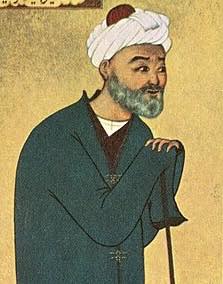 For many readers beyond Central Asia, the name Alisher Navoiy (1441–1501) remains little known. He was born in what is today Afghanistan and lived much of his life in Herat, then one of the great cultural centers of the Timurid world. He is regarded as the father of Uzbek literature not because of geography, but because he consciously chose to create his major works in Chagatai (Old Uzbek), elevating it into a full literary language and laying the foundation for modern Uzbek literature.
While Navoiy is best known as a poet, thinker, and statesman, today I would like to introduce him from another perspective – as one of the most remarkable philanthropists of his time.
Living in the 15th century, Navoiy used his own wealth, quietly and without display, to build public institutions on an extraordinary scale: madrasas (which functioned as universities), schools, places of worship, public baths, pools, roadside inns, dams, and many other facilities created solely for public benefit.
Historians write in detail about how Navoiy personally financed the reconstruction of his hometown, Herat, after a devastating earthquake. They also record that on several occasions he paid the taxes of the entire population of the city from his own resources, simply to spare people additional hardship.
According to historical accounts, 12,000 university students were fully supported by Navoiy – from clothing and food to books and living expenses – and he introduced stipends for them. Even the lighting of classrooms and student dormitories was paid for by him.
Historians also note that he supported teachers beyond their salaries: providing horses and equipment, ensuring fodder, and even donating homes to those without shelter. Every month, in addition to staple foods, he donated the equivalent of about three tons of meat to the educational institutions under his care.
Sources further mention that at the beginning of each year, one thousand poor people received complete sets of clothing from him. Navoiy personally oversaw the daily preparation and distribution of food to more than a thousand people, and each year he distributed two thousand coats, along with hats, turbans, shirts, and shoes.
By modern calculations, the scale of his personal spending on public welfare suggests that Navoiy would be considered a billionaire by today’s standards – one who chose to direct his wealth not toward luxury or power, but toward education, culture, and the dignity of ordinary people.
Sometimes I allow myself a quiet, almost naïve thought: if even a tiny part of Navoiy’s resources were available today with me, how much could be done in his name. One could imagine an annual international poetry festival bearing his name; long-term creative residency programs in Uzbekistan for foreign poets, writers, translators, and scholars; efforts to help a city like Navoiy gain recognition as a UNESCO City of Literature; and perhaps even the creation of Navoiy Institutes abroad – cultural and literary centers, similar in spirit to the Goethe-Institut or the Confucius Institute – dedicated to language, literature, and cultural dialogue.
As an Uzbek, I cannot help but ask a difficult but necessary question: if one individual could achieve so much five centuries ago, what should be possible today – with state institutions, public budgets, and cultural agencies in Uzbekistan – to honor, translate, and share such a legacy with the world?
Azam Abidov